
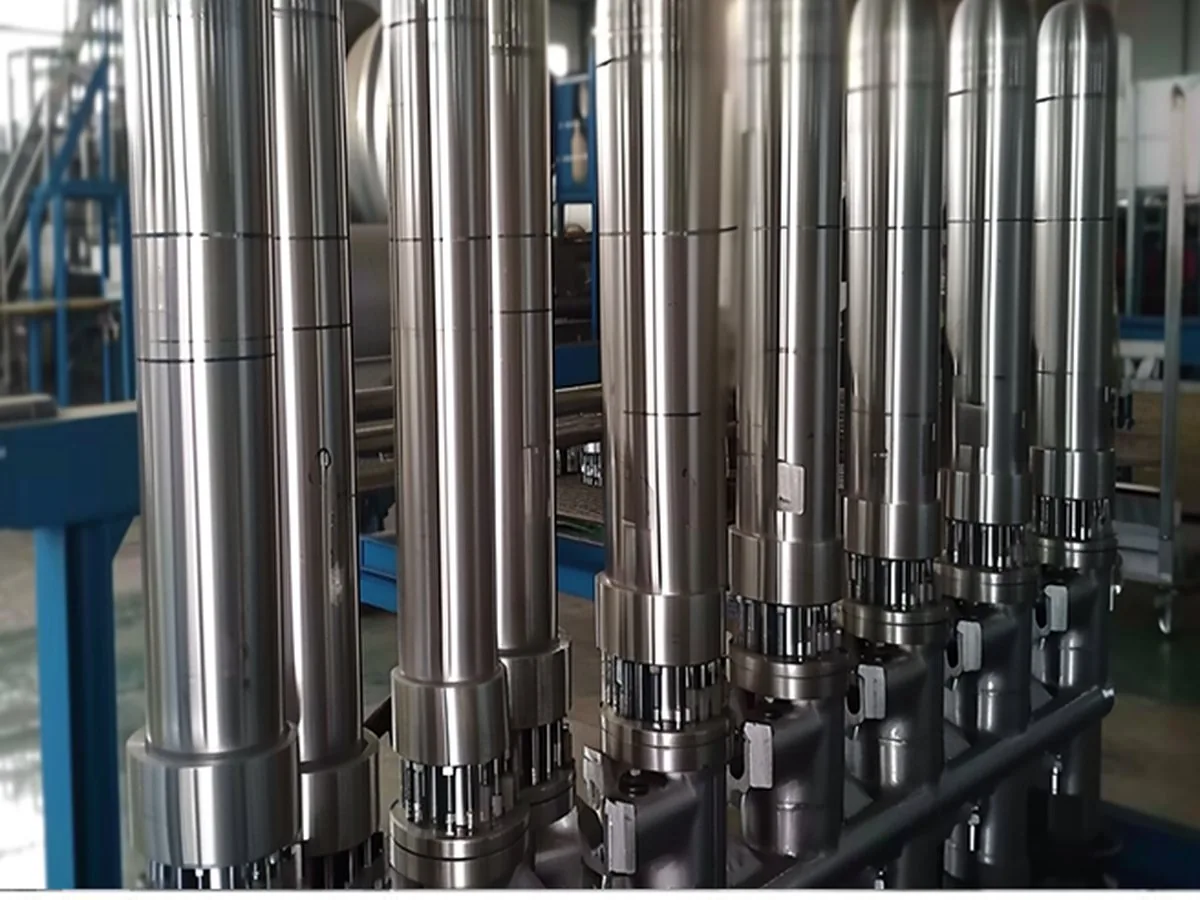
Argentina’s National Institute of Agricultural Technology (INTA) has developed sizing guidance for off-grid solar-powered subsurface drip irrigation at its Manfredi station in Córdoba. The work, reported by pv magazine Global on 2 October 2026, tested a 10 kW solar pump with an 18 kW PV array.
What the trial found
The original system irrigated 6 hectares. INTA then used the same pump and PV array to serve 12 hectares by matching water application more closely to the needs of wheat, soybeans and corn. The reported benchmark was about 2 m³/h of flow per hectare, while the researchers also found value in having more PV capacity than the pump’s nominal power so the pump could run for longer in weaker sunlight.
These are field-study observations, not a universal design rule. Actual sizing still depends on source yield, total dynamic head, pipe losses, crop demand, storage and the local solar resource. A hydraulic model and measured duty point remain necessary before equipment is selected.
Why it matters for solar-water projects
The result highlights a practical trade-off: maximizing water delivery to a small plot is not always the same as using solar pumping most efficiently. Scheduling, drip uniformity and seasonal crop demand can be as important as the pump nameplate.
Aquasolar did not participate in this external research. For project teams, the useful takeaway is to size the complete PV, controller, pump and distribution system around water demand and operating hours rather than applying a single power ratio everywhere.
FAQ
What equipment did the trial use?
The report describes a 10 kW solar pump and an 18 kW PV array for subsurface drip irrigation.
Did the same system serve a larger area?
Yes. INTA reported expanding the trial from 6 to 12 hectares by adjusting irrigation allocation, without changing the pump or PV array.
Where is the source?
pv magazine Global report, published 2 October 2026.